
Last updated October 30, 2026
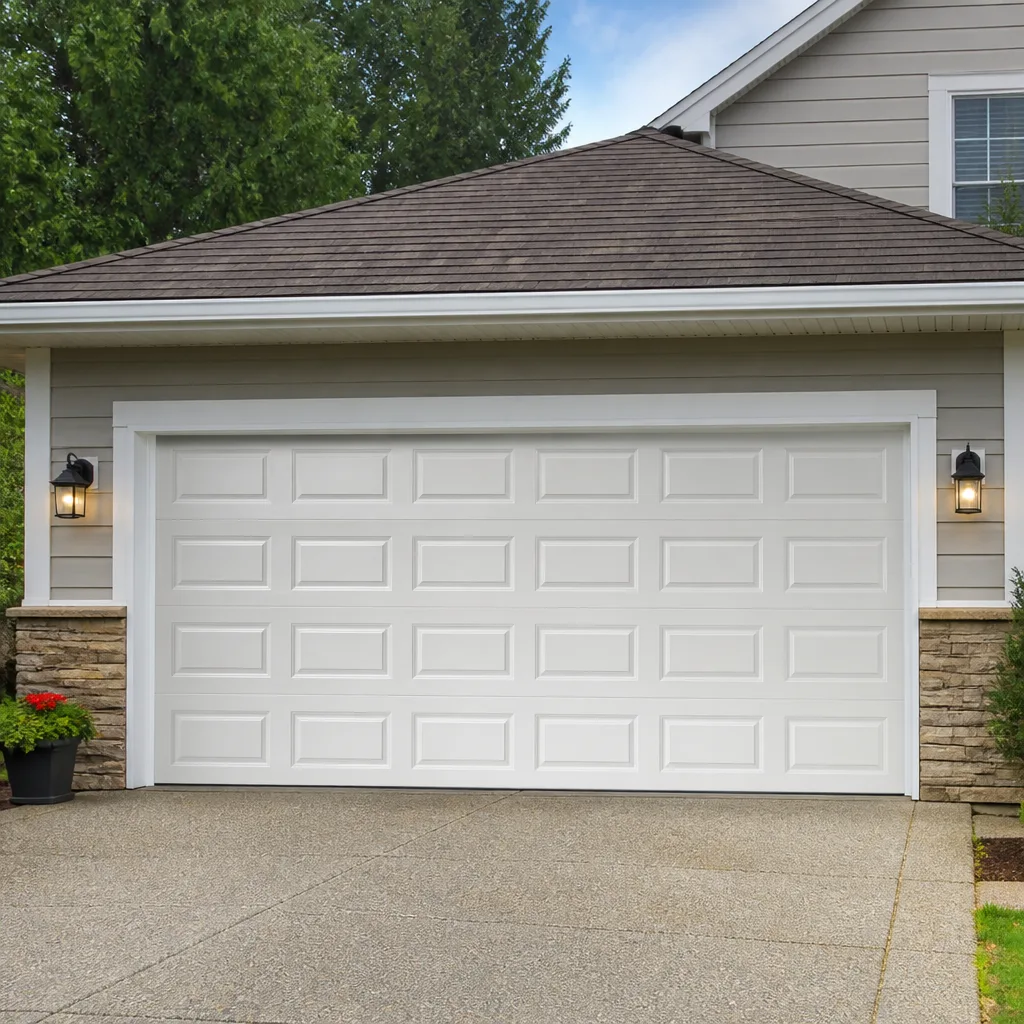 Raised-panel steel
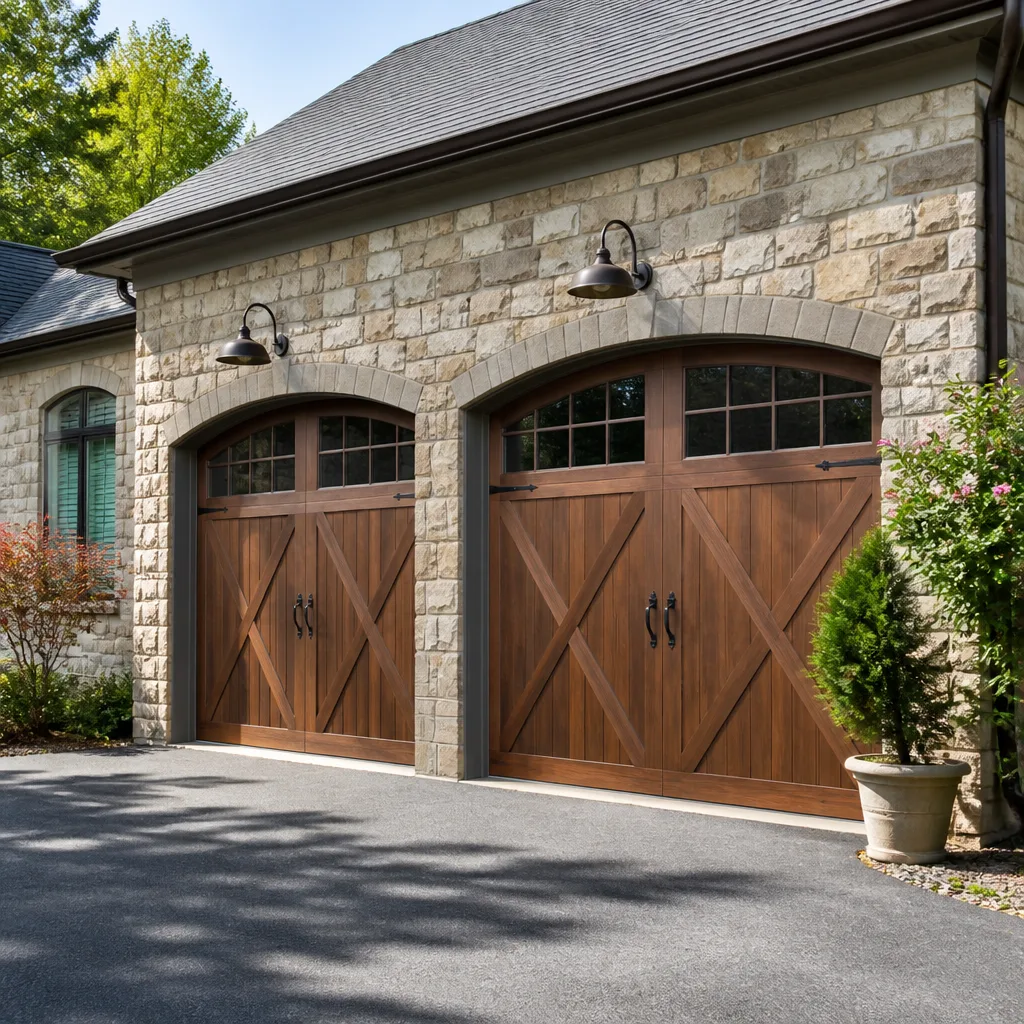 Carriage house
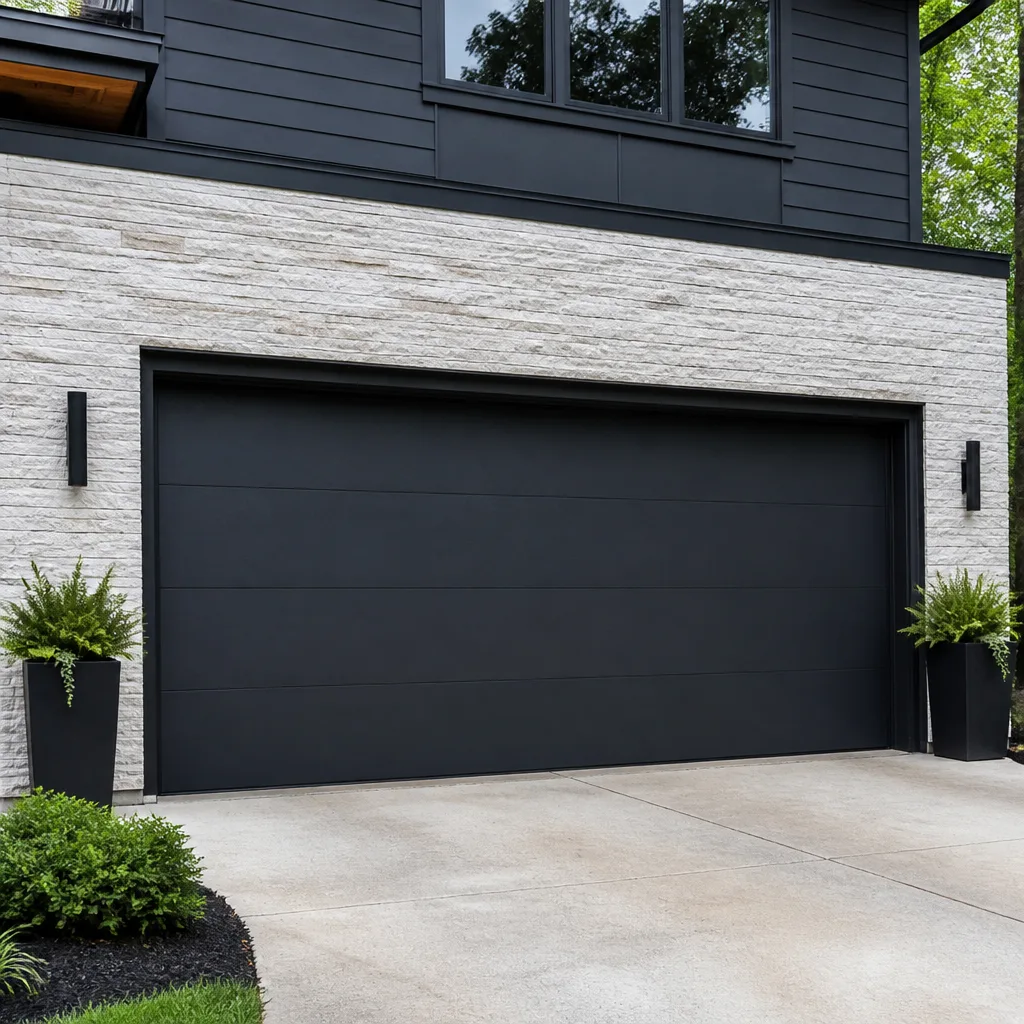 Modern flush
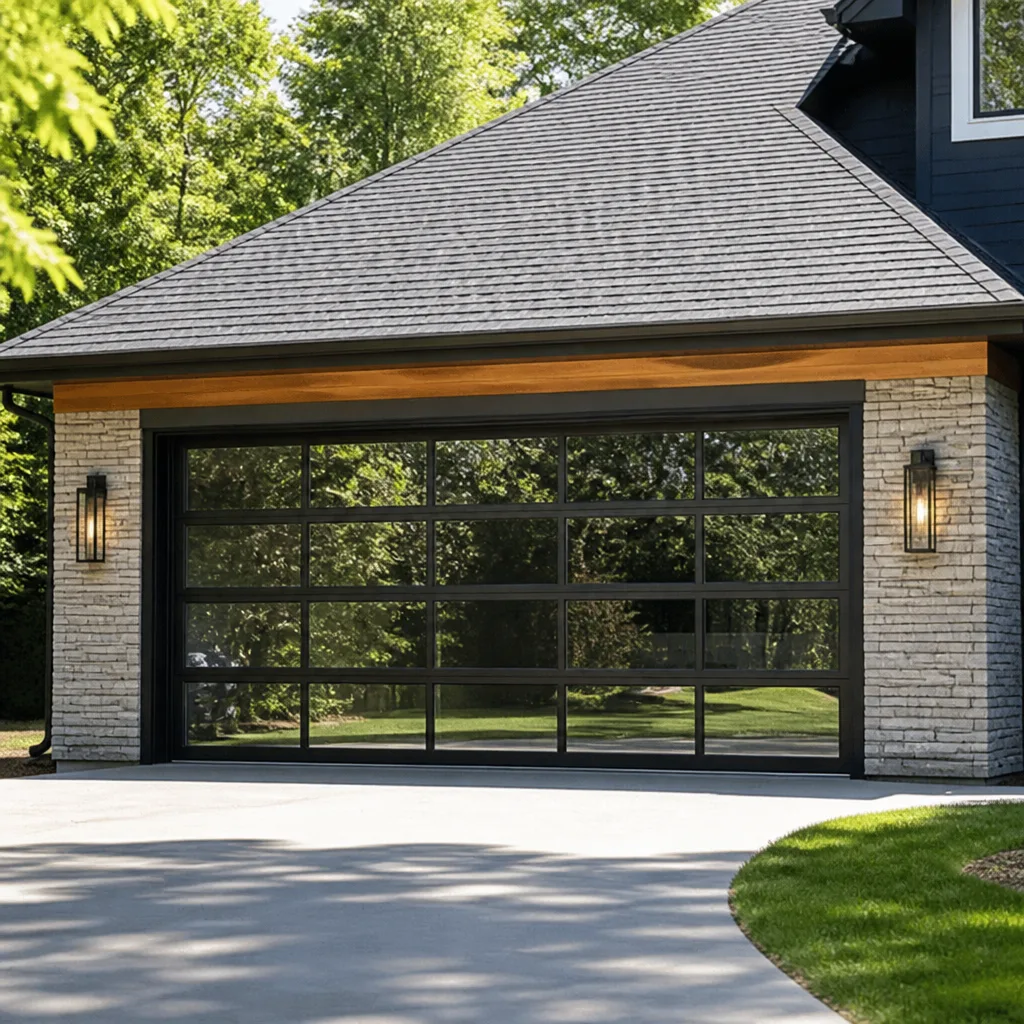 Full-view glass
 LiftMaster openers
 Chamberlain openers
Full 25-point door and opener safety check with every visit - springs, cables, rollers, tracks, and your LiftMaster or Chamberlain opener included
You get a price before we start. It does not change when the truck arrives.
Get your free estimateGarage Door Warning Signs: A Hollywood Homeowner’s Reference Guide
Most garage doors in Hollywood don’t fail suddenly. They telegraph trouble for weeks, sometimes months, before the moment you’re standing in the driveway at 7 a.m. with a door that won’t budge and a car trapped inside. A popping sound on the way up, a door that drifts down after opening, a cable that looks fuzzy instead of clean. These are the messages your door is sending. This guide is a field manual for reading them. We’ll walk through the exact sounds, movements, and visual cues that precede a breakdown, what each one traces to, and how much time you realistically have to act before a nuisance becomes an emergency in Hollywood, FL.
Quick Answer
Garage door warning signs fall into three categories: sounds (popping, grinding, squealing, banging), movements (hesitation, reversal, drifting, jerking), and visual cues (rust lines on springs, fuzzy cables, uneven coil spacing). Each points to a specific component, from worn rollers to a failing torsion spring to salt-damaged cables, and most are fixable for under $200 if caught early. In Hollywood, salt air accelerates cable and spring wear faster than you’d expect, so a 30-second visual check every month is the cheapest insurance you can buy.
Styles & brands we work with
Table of Contents
- Sound-Based Diagnosis: What Each Noise Traces To
- Torsion Spring Visual Inspection: The Rust Line, the Gap, and the Uneven Coil
- The 30-Second Manual Lift Test: How to Tell if Your Door Is Balanced
- Hollywood Specific: Salt Air and the Cable That Looks Fine Until It Isn’t
- Opener Behavior Flags: When the Motor Is Talking to You
- Track and Roller Wear: The Grind That Builds Slowly
- Panel Separation and Seal Rot: The South Florida Combo
- Common Mistakes to Avoid
Sound-Based Diagnosis: What Each Noise Traces To
A grinding noise on the way up is not the same as a grinding noise on the way down. Homeowners in Hollywood ask us about “the grinding sound” constantly, and the answer depends entirely on direction. If it grinds on the upswing, you’re almost always hearing a worn roller with a seized bearing. The roller stops spinning and starts sliding along the metal track, creating friction and metal-on-metal noise. That’s a $25 part and a 20-minute fix. If it grinds on the way down, the likely culprit is the cable drum at the top corners of the door. When the drum bearings wear out, every downward cycle grinds them further. Ignore that one and the drum can seize, the cable can jump the track, and you’re looking at a $400 repair instead of a $60 bearing replacement.
Here’s the full sound index we use when homeowners call our Garage Door Repair in Hollywood team:
- Popping on the way up: This is the torsion spring binding and releasing as it winds. It’s not necessarily an emergency, but it does mean the spring is nearing the end of its usable life. Springs are rated for roughly 10,000 cycles. In a Hollywood household that opens the door three or four times a day, that’s seven to ten years. If yours is older and popping, start budgeting for replacement.
- Squealing that changes pitch: A dry bearing in the roller, hinge, or spring support bracket. A silicone-based lubricant at each pivot point often resolves it within minutes. Heavy grease is a mistake because it attracts salt and sand in Hollywood’s coastal air and turns into grinding paste.
- Banging when the door reaches the top or bottom: The door is traveling too far or too fast, usually because the opener’s travel limits or force settings are wrong. The opener slams the door into the frame. Left unfixed, this stress travels through the panels and into the hinges, cracking welds and loosening track bolts.
- Rattling during operation: Loose hardware, usually track bolts or hinge screws, worked free by thousands of vibration cycles. A socket wrench and ten minutes fixes most rattles.
- Clicking near the opener unit: The relay inside the opener motor is failing, or a gear inside the drive assembly has stripped a tooth. This one often progresses to complete opener failure within days or weeks. It’s more common on older LiftMaster and Chamberlain units that use plastic drive gears from the factory. We replace those gears routinely, but when the clicking is paired with hesitation, the motor itself is usually next.
The sequencing matters. A noise that’s present every cycle means active wear. A noise that’s only present in the morning or after rain means environmental effects like humidity swelling the wood frame or salt corrosion on metal parts that sit in contact. Either way, naming the exact noise and the direction it occurs is the fastest way to get an accurate diagnosis over the phone.
Torsion Spring Visual Inspection: The Rust Line, the Gap, and the Uneven Coil
The torsion spring is the single most dangerous component on your garage door. It stores enough energy to lift a 150 to 250 pound door, and when that energy releases incorrectly, the spring can break through skin, bone, or sheetrock. We’re not going to tell you to touch it, adjust it, or attempt any repair yourself. What we will tell you is how to read the warning signs from a safe distance, standing on the floor, without placing your hands anywhere near the spring.
A standard torsion spring runs horizontally above the door opening. On a typical two-car garage in Hollywood, there are one or two springs mounted on the header. Here’s the inspection sequence we teach homeowners:
- Look at the line of the spring. A healthy spring is a straight tube from the center bearing plate to the end cones. If you see a visible bend or kink anywhere along its length, the spring has fatigued unevenly. Replacement is weeks away, not years.
- Look at the coils themselves. A healthy spring has coils spaced evenly apart. When you see a section where the coils are bunched together, or a visible gap that’s wider than the surrounding coils, the spring has lost tension in that section and has begun to deform. This is the most common pre-failure sign we see in Hollywood, because salt air accelerates surface pitting, and pits concentrate stress until the coil gives way.
- Look for the rust line. Surface rust on a garage door spring in Hollywood is nearly inevitable. The salt in the air settles on exposed metal. But a rust line, a distinct darker stripe running along one side of the coil, is different. It means moisture is settling consistently in that one spot, often from a leaking header seal or a door that’s been left partially open in humid weather. That rust line is where the spring will break.
- Check the center gap. On a two-spring system, both springs should look identical. If one looks stretched, faded, or rusted more heavily than the other, they’re wearing unevenly. One will snap before the other, and the remaining spring will be overloaded instantly, which usually breaks it within days or weeks of the first failure.
- Look at the cable ends where they meet the spring anchor. Frayed cable strands here, or a gap between the cable and the drum, indicate the spring is no longer holding correct tension. Do not try to adjust this yourself. The cable carries the same force as the spring.
If your inspection turns up any of these signs, call a professional. Spring replacement on a Hollywood door typically runs between $180 and $340 depending on spring size and whether it’s a one or two spring system. The cost of ignoring the warning is a broken spring at the worst possible moment, a door that’s impossible to lift manually, and in some cases, damage to the door panels or the opener motor from the unbalanced load.
The 30-Second Manual Lift Test: How to Tell if Your Door Is Balanced
A balanced garage door should stay where you put it. Halfway up, it should hold position without help. If it goes up on its own, the springs are over-tensioned. If it falls, the springs are weak or broken. This matters because your opener motor was designed to lift a balanced door, not to do the actual lifting work. Every cycle an unbalanced door makes is like asking a 1/3 horsepower motor to do a 1/2 horsepower job. The motor burns out years early, and in our experience with Garage Door Opener Repair in Hollywood, premature motor failure is almost always a door problem that was never diagnosed, not an opener problem at all.
Here’s the test. First thing in the morning, before you’ve opened the door for the day:
- Pull the red emergency release cord that hangs from the opener rail. You’ll hear it disengage. The door is now manual.
- Lift the door by the handle or the bottom edge until it’s about waist high, roughly three feet off the ground.
- Let go slowly, keeping your hands close but not touching.
- Watch what happens for three full seconds.
A healthy door stays at waist height. It might drift an inch or two, but it should not move significantly. A door that rises on its own has springs that are over-tensioned, which wears hinge brackets and makes the door harder to close. A door that falls or slams toward the ground has springs that are failing or broken entirely. Do not operate the door electrically until the springs are replaced. The strain on the opener motor, the cables, and the panel hinges is compounding with every cycle.
In Hollywood, we see balance failure happen faster than in drier climates. Moisture and salt get into the spring coil surfaces, creating micro-pits that cause fatigue earlier in the spring’s life. A door that was balanced in March might not be balanced in September after a humid summer. Running this 30-second test once a season catches the drift while springs are still repairable with a tension adjustment rather than a full replacement.
Hollywood Specific: Salt Air and the Cable That Looks Fine Until It Isn’t
The lifting cables on a garage door are made of braided steel wire. In most of the country, they last the life of the door. In Hollywood, they don’t. The salt air that blows in from the Atlantic settles on every exposed metal surface, including the cables that run vertically along both sides of the door. Salt is hygroscopic, meaning it pulls moisture from the air and holds it against the steel. The result is pitting and strand separation that looks, from six feet away, like the cable is just a little fuzzy.
That fuzz is the warning. Each individual wire in the braid is starting to snap at the surface. When one strand fails, the load redistributes to the remaining strands, which accelerates their failure. A cable that’s 20 percent compromised can look fine while carrying the spring’s tension, but it’s a dice roll every time the door cycles. When the cable finally separates, the door drops on that side, the spring releases uncontrolled, and the door can come off its tracks entirely. That’s a major repair, not a cable swap.
Here’s how to check your cables in a Hollywood garage:
- Stand at the back of the garage with the door closed, and look at both vertical cables against the wall.
- Run your eyes along the cable from bottom bracket to top drum. A healthy cable looks like a clean, tight twist of uniform strands.
- Look for any section that appears fuzzy, hazy, or has little whiskers sticking out. That’s strand separation starting.
- Check both cables. They should look identical. If one looks fuzzier than the other, the salt is affecting them unevenly, probably due to air flow patterns in your specific garage.
- Pay special attention to the bottom six inches, where water from the driveway splashes up when the door opens after rain. That’s the most common failure zone we see on Hollywood doors.
Cable replacement is not a DIY job. The cable carries full spring tension, and if it snaps while you’re working on it, the results can be serious. A trained technician can replace both cables in under an hour, and the cost in Hollywood typically ranges from $150 to $250 including the service call. Compare that to a door off its tracks, where repairs routinely run over $500. This is one of those repairs where catching it early pays for itself multiple times over.
Opener Behavior Flags: When the Motor Is Talking to You
Your opener has a diagnosis, not just a symptom. That’s the principle we apply to every service call, and it’s why we treat Garage Door Opener Repair in Hollywood as its own dedicated discipline rather than an add-on to door work. The opener’s behavior under load tells you whether the problem is in the motor, the sensors, the logic board, or the door it’s trying to move. Treating them all the same is how small electronic problems become expensive mechanical ones.
Here are the behavioral flags we see most often, and what each one means:
- Hesitation when starting. The door sits still for a beat after you press the button, then jerks into motion. This is almost always a door balance problem or a frayed cable making the load heavier than the opener expects. The motor is trying to move against resistance, and it’s hesitating before applying full torque. Fix the door, and the hesitation disappears without touching the opener.
- Reversal without obstruction. The door starts to close, then reverses and goes back up, with nothing in the way. In most cases, this is the safety sensors misaligned or dirty. A quick cleaning of both sensor lenses and a check that they’re pointed directly at each other resolves it. If the sensors check out, the problem is usually the force sensitivity setting or the door binding in its tracks, which the opener interprets as an obstruction.
- Remote lag. You press the button and wait. Nothing happens for two to five seconds, then the door moves. This is electronic, not mechanical. On older Genie and Craftsman openers, it’s typically a failing receiver or a capacitor on the logic board. On LiftMaster and Chamberlain units with MyQ, interference from LED bulbs is a known culprit. Swapping the garage bulb for a non-LED unit often resolves it without any opener repair.
- Opener runs but door doesn’t move. You hear the motor spin, but the door stays put. Unless the door is in manual mode from the emergency release, this is a stripped drive gear. Plastic gears on LiftMaster and Chamberlain openers are designed to fail before the motor does, sacrificing themselves to protect the more expensive component. Gear replacement is a standard repair.
- Door closes, then immediately reopens a few inches. The travel limit is set too far, and the opener thinks it hasn’t reached the floor yet, so it reverses to try again. This one is a programming adjustment, not a parts replacement, and it takes about five minutes.
None of these are problems you need to live with. Every one of them has a specific fix, and a technician who understands opener architecture can diagnose and resolve most of them in a single visit. The key is not ignoring the early flags until the control board fries or the motor burns out, because those are the $300 plus repairs that could have been a $80 fix.
Track and Roller Wear: The Grind That Builds Slowly
The track is the rail system that guides the door from vertical to horizontal across your garage ceiling. The rollers are the small wheels, usually steel or nylon, that ride inside those tracks. Together they determine whether the door moves smoothly or fights itself on every cycle. In Hollywood, track and roller wear follows a predictable pattern: the salt air accelerates roller bearing wear, and the humidity causes the track supports to loosen as the wooden framing they’re bolted into expands and contracts through the seasons.
The warning signs are subtle but consistent:
- Visible metal dust or shavings below the track. This is the byproduct of a roller with a seized bearing scraping along the track. It means the roller is no longer spinning, and the track is being ground down with every cycle.
- The door sways slightly from side to side as it moves. This usually means worn rollers with loose bearings, or track supports that have loosened. An even door should track perfectly vertically without lateral movement.
- A dip or ripple in the door’s motion. If the door seems to pause or dip at a specific point along its travel, there’s a wear spot or misalignment in that section of track. The rollers are catching on something.
- Track bolts that are visibly backed out. The bolts that hold the track to the wall and ceiling brackets work loose over time, especially in homes where the door cycles multiple times daily. Loose bolts allow track flex, which alters the door’s travel path and puts uneven wear on every roller.
Roller replacement is a maintenance item, not a major repair. Nylon rollers with sealed bearings last longer in Hollywood’s salt air than plain steel rollers, and upgrading all the rollers on a two-car door typically runs $100 to $180 including labor. Track realignment is more involved, often requiring service on both sides and the horizontal sections above. But caught early, before the track itself is worn through or bent, it’s a repair every time. Wait until the door derails, and you’re suddenly dealing with a 200-pound door hanging from one cable, which is both dangerous and expensive.
Panel Separation and Seal Rot: The South Florida Combo
Two things happen to Hollywood garage doors more than any other location we know: panel seams loosen because the constant humidity softens the adhesive and backing materials, and bottom seals rot from standing water, salt, and sun exposure. Neither one seems urgent. Both become structural problems if ignored.
Panel separation starts small. You’ll notice a hairline crack at the seam where two panels meet, often on the side that faces the afternoon sun. Over months, the crack widens as the door flexes through its opening cycle. Eventually, the panel loses its connection to the reinforcing strut behind it, and the door starts to bow. A bowed panel doesn’t just look bad. It changes the door’s center of gravity, which throws off the balance, which puts strain on the springs and opener. What started as a cosmetic crack has now become a structural imbalance affecting every component.
The bottom seal, that rubber or vinyl strip along the bottom edge, is the door’s first line of defense against Hollywood’s rain and flooding. When it rots or tears, water enters the garage along the full width of the door. In a coastal Hollywood neighborhood where standing water after a storm is common, a failed seal means salt water sitting against the bottom panel, wicking up into the panel’s insulation, and corroding the bottom bracket and cable attachments. The fix is simple, a replacement seal costs $30 to $60 in parts if you’re having it done. But let it go through one wet season, and you’re looking at bottom panel replacement, which is a $400 plus job on most doors.
Check the seal visually every couple of months. Look for cracks, tears, or sections where the seal has pulled away from the door’s bottom channel. Run your hand along the inside bottom edge after a rain and feel for moisture. In Hollywood, where summer thunderstorms are a daily reality, this check matters more than it does almost anywhere else in the country.
Common Mistakes to Avoid
- Lubricating a problem back into silence. Some Hollywood homeowners respond to a grinding noise by hosing the track with WD-40. This quiets the symptom for a few days, then makes the wear worse because the solvent washes out whatever grease was left, and the salt air turns the residue into a grinding compound. Diagnose first, lubricate second, and only with a silicone-based garage door lubricant on the specific pivots that need it.
- Continuing to use the door after a spring breaks. A door with one broken spring and one good spring is a door that’s violently out of balance. Using the opener in that state rips the cables, bends the track, and destroys the opener motor. If you hear a spring snap, stop cycling the door immediately.
- Standing under the door while testing the balance. Never put any part of your body under a garage door that’s disengaged from its springs and in manual mode. The door weighs more than you think, and if a cable fails, it drops faster than you can react. Stand to the side.
- Ignoring remote lag as “just the opener getting old.” Remote lag that worsens over time is often a capacitor failing on the logic board. It’s a known failure pattern on Genie and older Craftsman units. The fix is a simple board or capacitor replacement. Ignore it, and you’ll eventually have a fully dead opener at the worst time.
- Assuming a newish door doesn’t need inspection. Even doors under five years old develop problems in Hollywood’s climate. The salt air doesn’t care how new your hardware is. A quarterly visual check takes five minutes and catches cable fuzz, rust lines, and seal rot before they become failures.
- Replacing the opener instead of fixing the door. When the door is hard to move and the opener struggles, the problem is rarely the opener. Replacing the motor doesn’t fix a worn-out spring or a seized roller, and the new opener will fail early too because it’s doing the same impossible work. Diagnose the door first.
See the difference
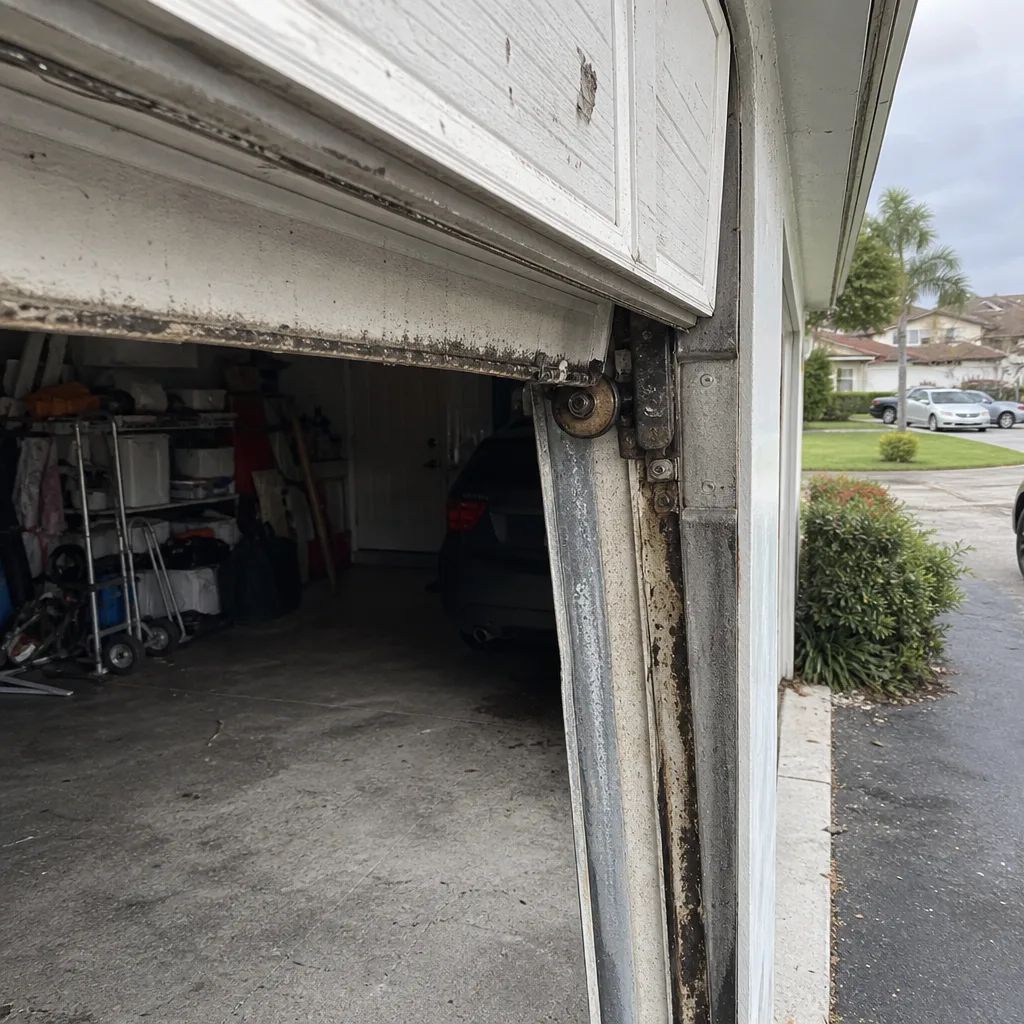 Before
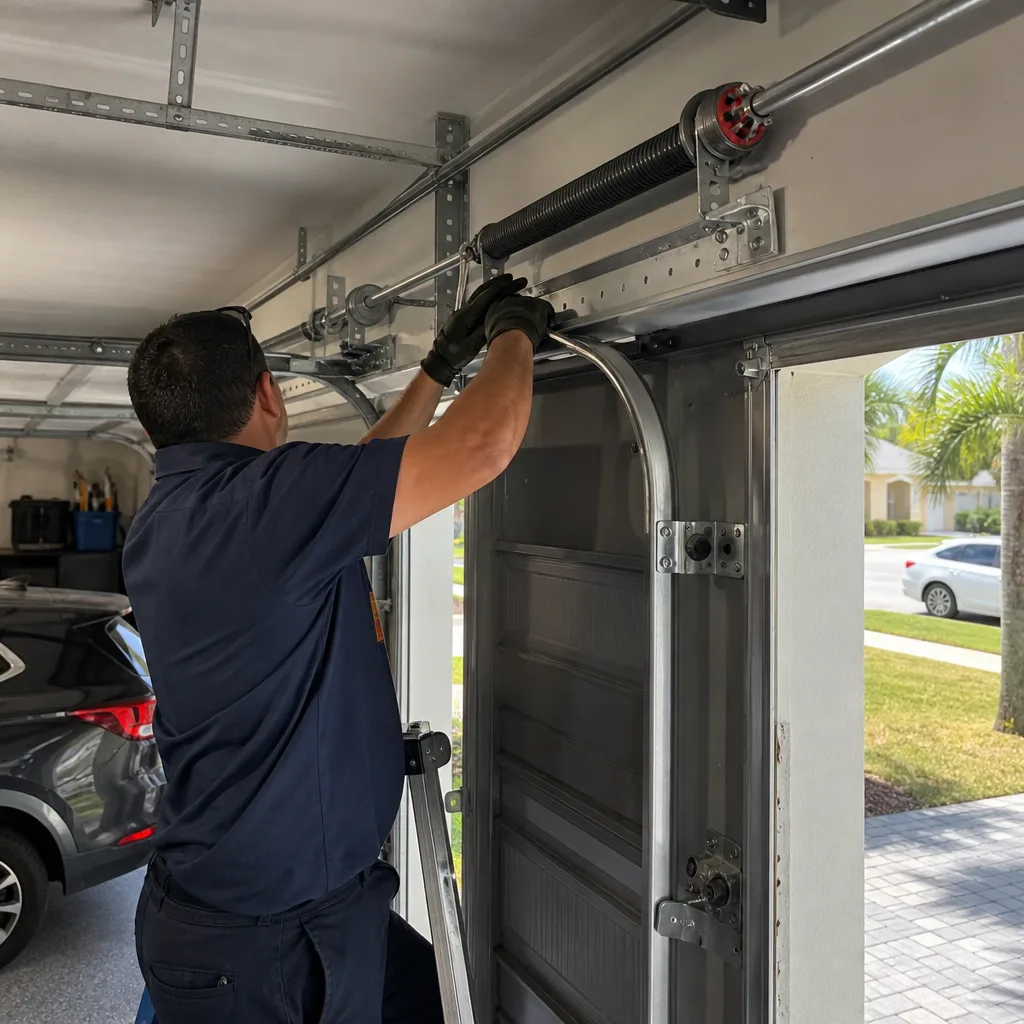 After
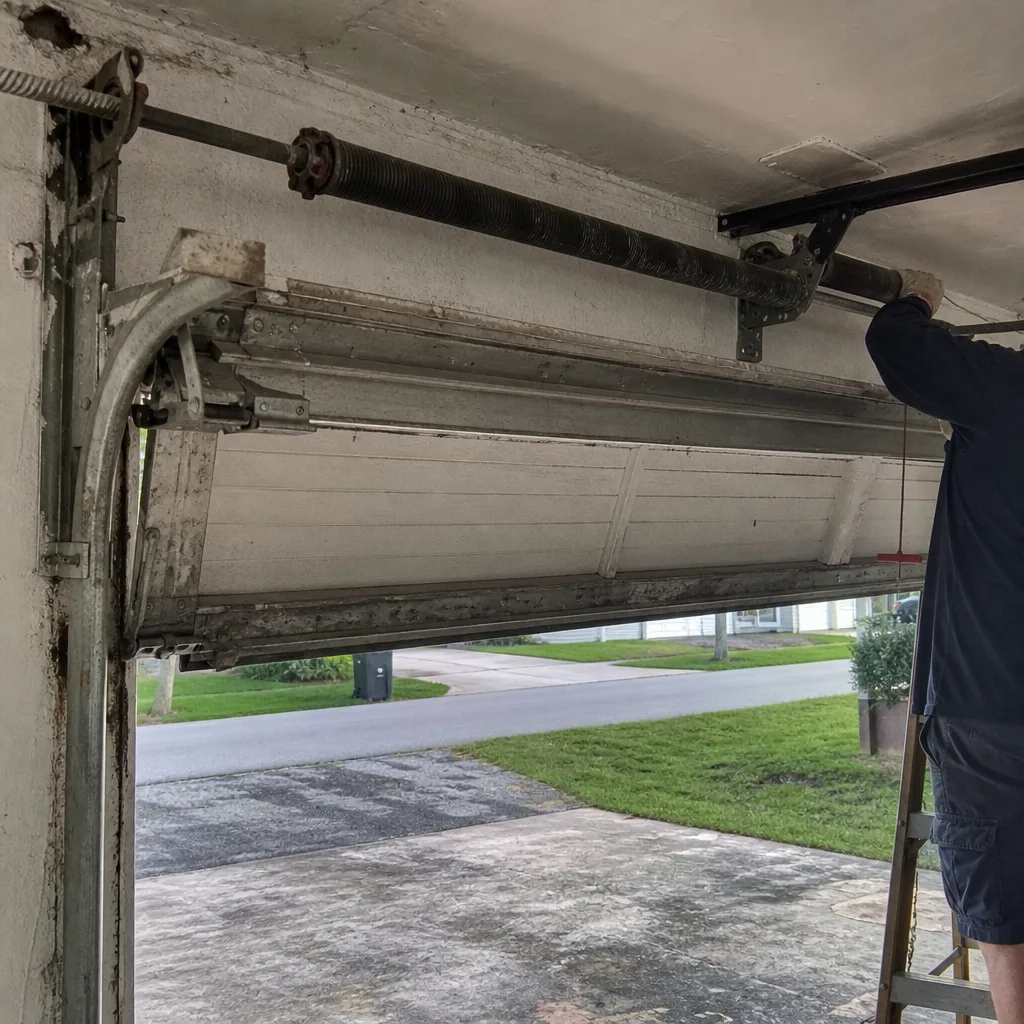 Before
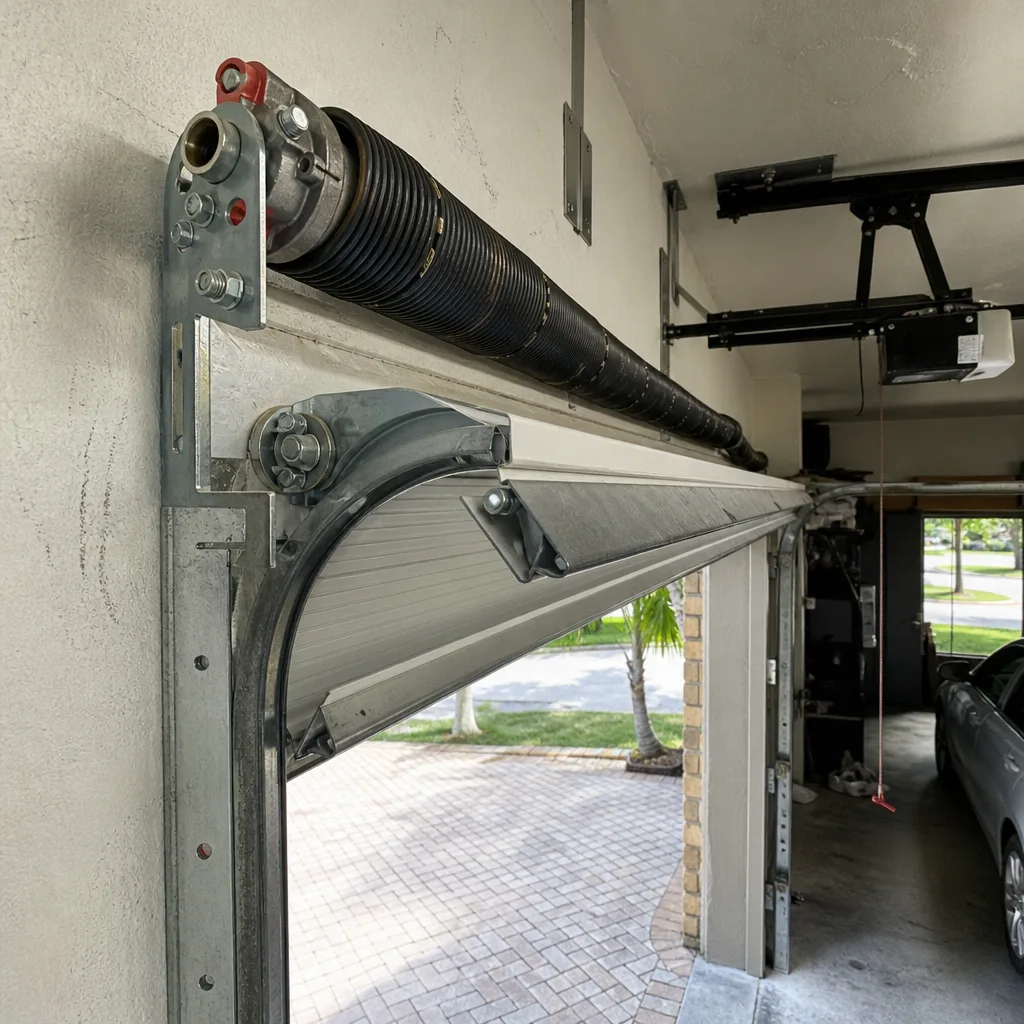 After
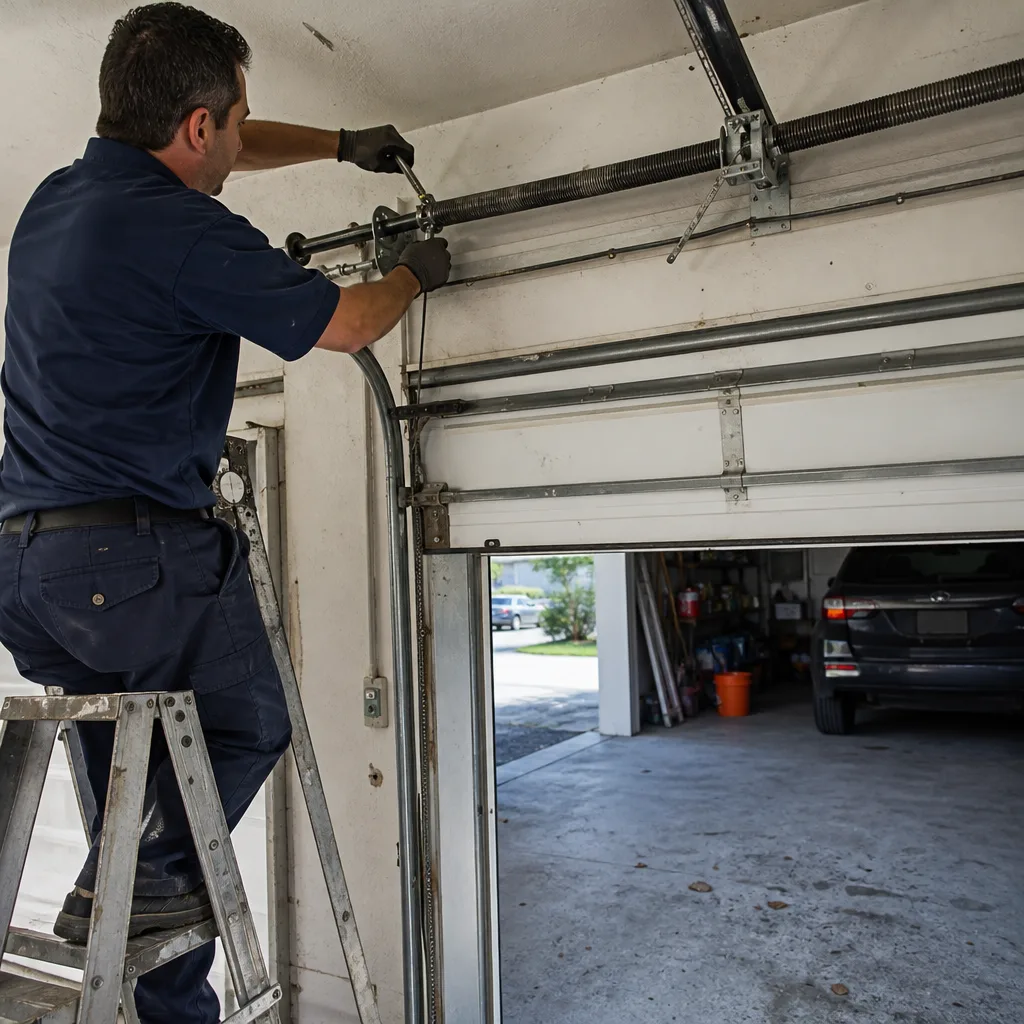 Before
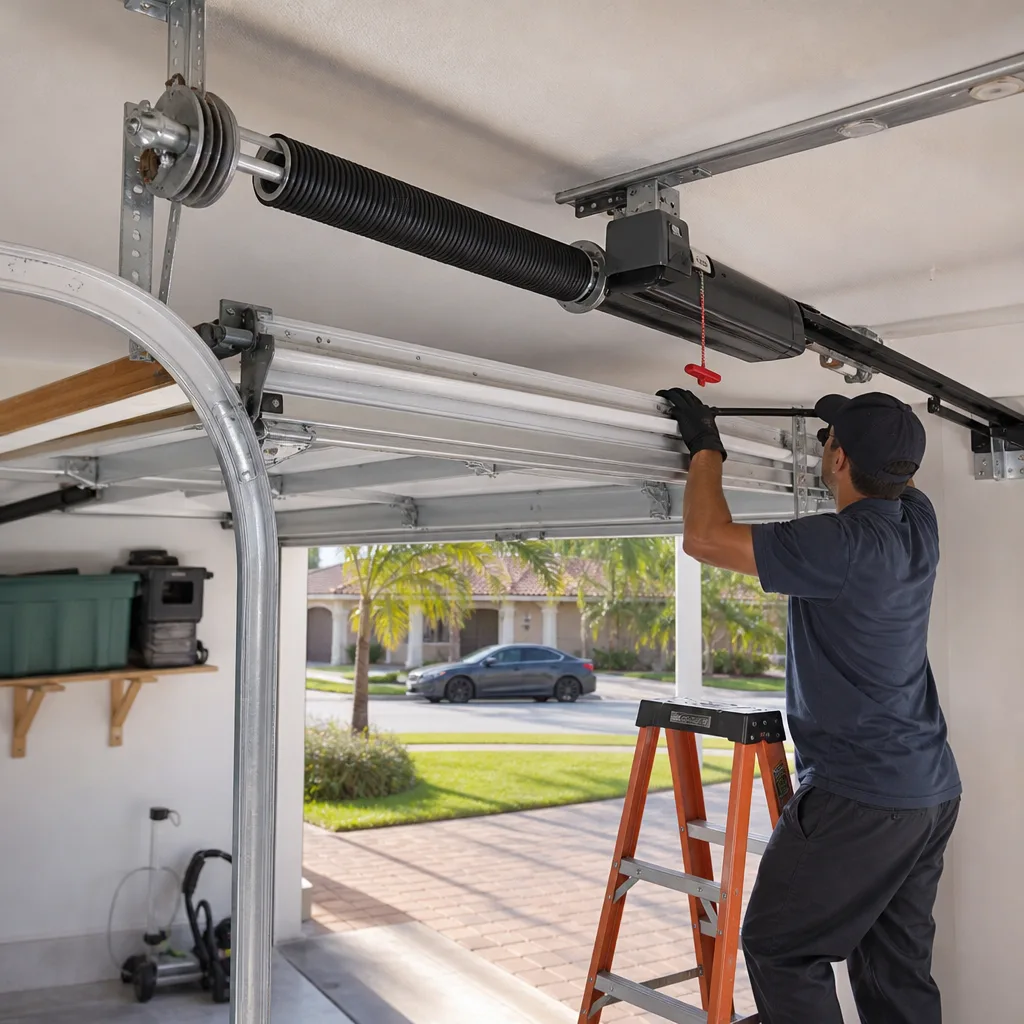 After
When to Call a Professional
Most of the warning signs in this guide are actionable by a homeowner with basic tools and good sense. A rattle is fixed by tightening bolts. A squeal is fixed by lubricating a pivot. A dirty sensor is fixed with a cloth. But there’s a hard line. If the warning involves a torsion spring, a lifting cable, a drum, or anything else that carries the stored energy of a loaded spring, the right move is a professional. These components hold enough force to cause serious injury, and the work of releasing, replacing, and re-tensioning them requires training and the right tools. If your inspection turns up a rusted spring, a fuzzy cable, a door that slams when you run the manual lift test, or an opener that makes noises you can’t identify, call a garage door specialist and describe exactly what you saw and heard. Bright Star Garage Door Repair offers free estimates in Hollywood, covering everything from spring and cable replacement to full Garage Door Installation in Hollywood. Call (833) 589-8106 and we’ll come out, look it over, and quote a price before any work begins.
Frequently Asked Questions
Garage door spring replacement in Hollywood typically costs $180 to $340, depending on whether you have one or two springs, the spring size required for your door’s weight, and whether the replacement is standard or high-cycle. The price is always quoted and agreed before any work starts. Call (833) 589-8106 for an exact quote based on your specific door and spring configuration. Estimates are free.
Yes, cable replacement is a same-day repair when caught before the cable separates. Our technicians carry the common cable lengths and fittings for most Hollywood doors, including Raynor and Wayne Dalton models. If the cable has already snapped and the door has come off its tracks, the repair is more involved and may require a second visit depending on damage. Call (833) 589-8106 and describe the cable’s condition to get a realistic timeline.
No. The price you’re quoted before the work starts is the price you pay. If the technician finds additional problems, like a worn roller or a loose track bolt, you’ll be shown the issue and given an updated quote before anything extra is touched. No surprise charges, no work you didn’t approve. That’s the standard across all garage door repair in Hollywood from Bright Star.
Our service trucks are stocked with the most common springs, cables, rollers, hinges, and opener components for the brands we service, including LiftMaster, Chamberlain, Genie, and Raynor. Most repairs are completed in a single visit. For specialized parts on less common models, we’ll source the part and schedule the installation as soon as it arrives, with no additional trip charge for the return visit.
Monthly, at minimum. The salt air between the Intracoastal and the ocean in Hollywood accelerates cable corrosion, spring pitting, and roller bearing wear. A five-minute visual check of the cables, springs, track, and bottom seal catches most failures months before they happen. Add the 30-second manual lift test once per season, and you’ve covered the two biggest sources of surprise breakdowns.
Yes, and it’s more common than most homeowners think. An opener that hesitates, struggles, or reverses is often responding to an unbalanced door, a frayed cable, or a seized roller, not a fault in the opener itself. The opener motor reads resistance and reacts. That’s why our approach to opener repair in Hollywood starts with diagnosing the whole system, not just swapping parts on the opener unit. Call (833) 589-8106 and describe the opener behavior, the sound, and when it started. We’ll tell you over the phone whether it sounds like a door issue or an opener issue before anyone comes out.
The Bottom Line
Garage doors give warning. The pop before the spring snaps. The fuzz before the cable parts. The grind before the roller seizes. The hesitation before the opener quits. Homeowners in Hollywood face the extra factor of salt air, which makes these warnings appear earlier and progress faster than they would inland. The fix is a monthly visual check, a seasonal balance test, and the discipline to act on what you find rather than hoping it goes away. If you see a rust line or a fuzzy cable, hear a noise you can’t name, or feel the door fighting itself, call a specialist who can name the part, the brand, and the fix. It’s the difference between a $25 roller and a $400 track repair, a $180 spring and a burned-out motor. The door is already telling you. Now you know how to listen.
Written by the team at Bright Star Garage Door Repair, serving Hollywood since 2012.